
What Is an Armature and Why Does Price Matter?
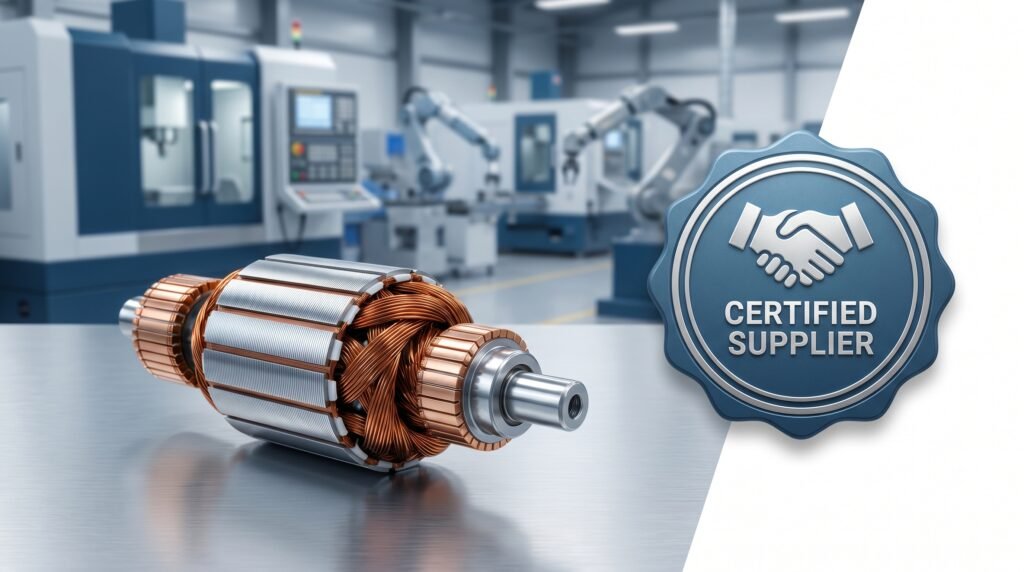
An armature is the rotating component inside a power tool motor — the part that spins the drill bit, grinder wheel, or hammer mechanism. It consists of a shaft, laminated iron core, copper windings, and a commutator. When the armature fails, the tool either stops working, sparks excessively, or runs weakly.
Replacing an armature is often the most cost-effective repair option. But the armature price you pay determines not just your profit margin — it affects how long the repair lasts, how many warranty returns you’ll deal with, and ultimately, your reputation.
Related: [How to Choose a Reliable Armature Supplier for Power Tool Components](/how-to-choose-a-reliable-armature-supplier/)
Key Factors That Affect Armature Price
1. Copper Quality & Winding Volume
Copper is the single biggest cost driver in armature manufacturing. The gauge (thickness), purity, and volume of copper wire used in the windings directly affect the armature price.
- Standard copper windings — Lower armature cost, adequate for light-duty tools
- High-purity copper with thicker gauge — Higher armature price, better heat dissipation, longer tool life
- Aluminum windings — Cheaper but less conductive and more prone to failure under load
A cheap armature almost always uses thinner copper or aluminum. It will work for a while, then burn out.
2. Balancing Precision
An unbalanced armature vibrates. That vibration wears out bearings, damages the gearbox, and makes the tool uncomfortable to use.
- Dynamic balancing adds to manufacturing cost but extends tool life significantly
- Unbalanced or poorly balanced armatures are cheaper upfront but cost more in long-term wear
When comparing armature price across suppliers, always ask: Is this armature dynamically balanced?
3. Commutator Quality
The commutator transfers electrical current to the windings. A high-quality commutator has:
- Precision-cut copper segments
- Smooth surface finish
- Proper mica undercutting
Cheaper armatures often use thinner commutator bars that wear out faster, leading to sparking and eventual failure.
4. Insulation System
Armature windings are coated with insulating varnish to prevent short circuits. The insulation class (B, F, or H) determines the maximum operating temperature.
- Class H insulation — Highest heat tolerance, highest armature cost
- Class B insulation — Standard for most power tools, moderate armature price
- Poor insulation — Risk of winding shorts, especially in high-heat tools like angle grinders
5. Manufacturing Origin
Armature price varies significantly by region of manufacture:
| Origin | Typical Price Range (per piece, retail) | Quality Level |
|---|---|---|
| China (OEM-grade factories) | $5–$12 | Good to Excellent |
| China (budget/bazaar-grade) | $2–$5 | Low — high failure rate |
| India (reputable manufacturers) | $4–$10 | Good — improving rapidly |
| European OEM | $12–$25+ | Excellent — premium pricing |
📌 Note: “Made in China” doesn’t mean low quality. Some of the best armature factories in the world operate in China. The key is knowing which factory produced the armature — not just the country of origin.
Armature Price by Power Tool Brand (Typical Range)
Here’s what you can expect to pay for replacement armatures across popular brands:
| Brand | Typical Armature Price (retail) | Notes |
|---|---|---|
| Bosch | $6–$15 | High volume, competitive pricing |
| DeWalt | $7–$16 | Similar to Bosch range |
| Makita | $7–$18 | Premium on some models |
| Hitachi / Hikoki | $6–$14 | Generally affordable |
| KPT / Dongcheng | $4–$10 | Budget-friendly, good value |
| Generic / Universal | $3–$8 | Check quality before buying |
Wholesale armature price is typically 30–50% lower than retail, depending on order volume.
Browse our full range: [Armature products](/product-category/armature/)
Wholesale vs. Retail: What to Expect
Wholesale Pricing (50–500+ pieces)
| Order Size | Typical Discount Off Retail |
|---|---|
| 50–100 pcs | 15–25% off |
| 100–500 pcs | 25–40% off |
| 500+ pcs | 40–55% off (custom pricing) |
Minimum Order Quantities (MOQ)
Most [armature suppliers](/how-to-choose-a-reliable-armature-supplier/) require:
- Standard armatures (Bosch, DeWalt, Makita): MOQ of 20–50 pieces
- Less common armatures (older models, niche tools): MOQ of 100+ pieces
- Sample orders: Some suppliers offer 1–5 pieces at slightly higher per-unit pricing for testing
How to Compare Armature Price Without Getting Fooled
A lower armature price isn’t always a better deal. Here’s how to compare intelligently:
✅ What to ask every supplier:
- What copper gauge do you use? (Thicker ≠ always better, but there’s a spec)
- Is the armature dynamically balanced? (If they don’t know what this means, run)
- What insulation class? (Class F or H is standard for power tools)
- What’s your warranty / return rate? (< 2% return rate is ideal)
- Can I see a QC test report? (Reputable suppliers have them)
- What’s the armature price including shipping? (Shipping can add 10–30%)
❌ Red flags:
- Armature price 50% lower than market average
- Supplier can’t answer technical questions
- No product photos or generic stock images
- “Just trust us, it’s good quality” with no data
- MOQ of 500+ for standard models (unreasonable)
Case Study: Why Cheap Armatures Cost More
A repair shop in Saudi Arabia bought 200 armatures at $3.50 each — significantly below the market rate of $7–$9. The initial savings: ~$700.
Within three months:
- 25% failure rate — customers returned tools with burned armatures
- Warranty costs — $1,200 in refunds and replacement labor
- Lost customers — several switched to competitors
Total loss: $500 + reputation damage.
Had they purchased quality armatures at $8 each from a [reliable armature supplier](/how-to-choose-a-reliable-armature-supplier/), they’d have saved money and kept customers happy.
Bottom line: The cheapest armature price is rarely the most affordable in the long run.
How to Get the Best Armature Price: Tips for Buyers
- Buy in bulk — The single biggest lever for lowering armature price is order volume
- Build a relationship — Consistent buyers get better pricing over time
- Mix popular + less common armatures — Combine high-volume items with niche ones to meet MOQs
- Ask about shipping consolidation — Combining orders reduces per-unit freight cost
- Test before scaling — Order samples from 2–3 suppliers, test on high-use tools, then negotiate
FAQ: Armature Price & Value
What’s the average armature price for an angle grinder?
A quality replacement armature for a standard angle grinder (Bosch, DeWalt, Makita 4.5″/5″) typically costs $6–$12 retail, or $4–$8 wholesale.
Why are some armatures so cheap?
Cheap armatures use thinner copper wire, skip balancing, and use lower-grade insulation. They work initially but fail quickly under load.
Does a higher armature price always mean better quality?
Not always — premium branding can inflate pricing. However, armatures priced significantly below market average are almost certainly cutting corners.
Where can I find wholesale armature pricing?
Contact Prime Armature directly for wholesale pricing on bulk orders. We supply repair shops and distributors across the Middle East, India, and Southeast Asia.
Final Thoughts
Armature price matters — but it’s just one piece of the puzzle. A slightly higher upfront cost for a quality armature saves you returns, warranty headaches, and lost customers. Whether you’re a repair shop owner, a distributor, or a maintenance manager, the right armature supplier makes all the difference.
Looking for quality armatures at fair wholesale pricing? [Browse our armature catalog](/product-category/armature/) or contact us for bulk pricing.
Want to know more about choosing suppliers? Read: [How to Choose a Reliable Armature Supplier](/how-to-choose-a-reliable-armature-supplier/) | [Stator Replacement Guide](/stator-replacement-guide/) | [Power Tool Motor Repair Guide](/power-tool-motor-repair-guide/)